Start Here
A simple nutrition framework
Nutrition doesn’t have to be complicated. Focus on food quality, balanced meals, and consistency—then fine-tune based on how you feel, perform, and recover.
If you’re managing a medical condition (like diabetes or high blood pressure), use these principles alongside guidance from your clinician.

The Basics
The 3 building blocks of a balanced plate
Most meals get easier when you build them the same way. Start with protein, add plants for fiber and micronutrients, then choose a carb or fat source that fits your day.
01
1) Protein
Aim for a palm-sized portion at meals. Protein supports satiety, muscle repair, and stable energy. Examples: eggs, Greek yogurt, chicken, fish, tofu, beans.
02
2) Plants
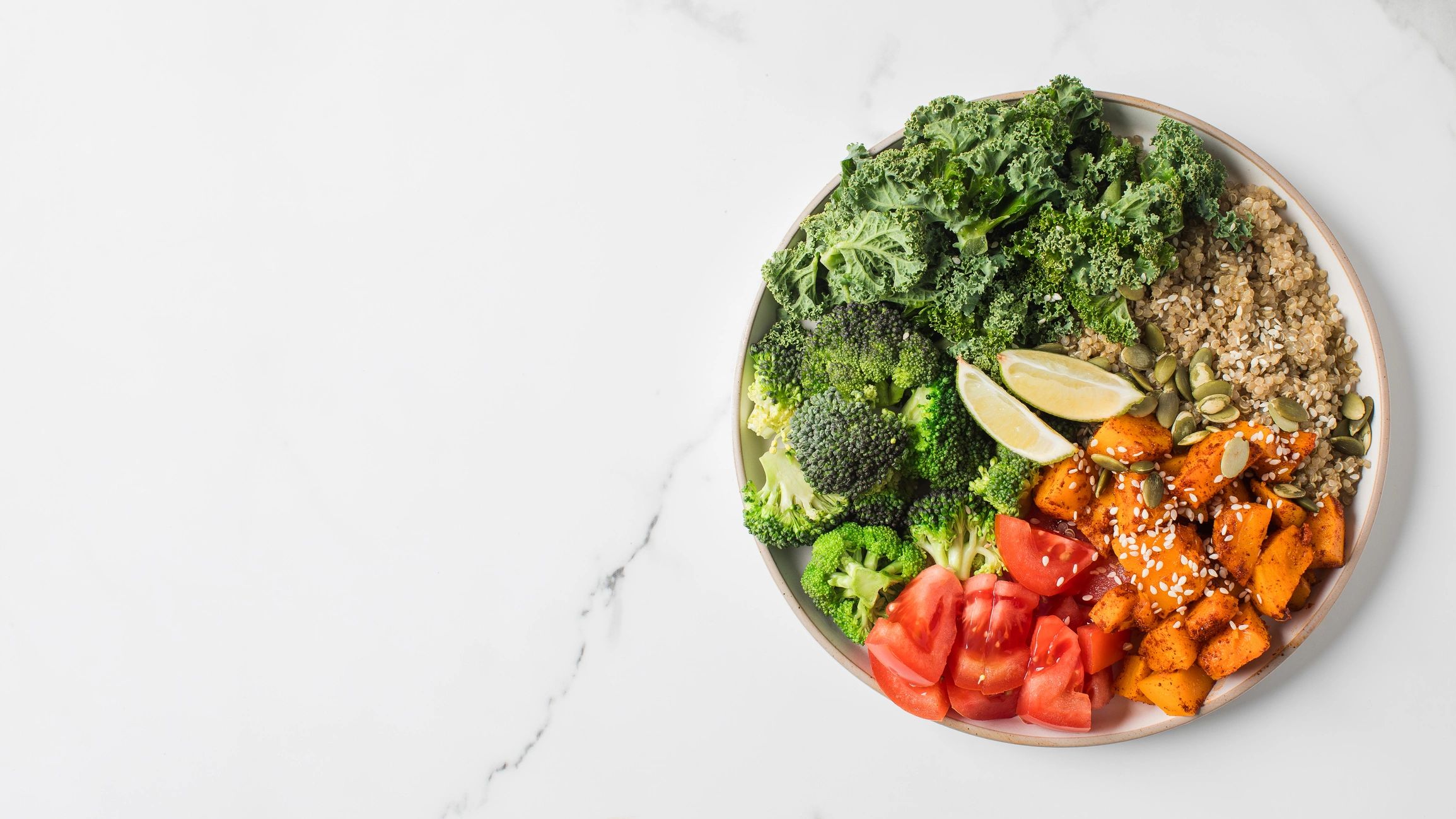
Fill at least half your plate with vegetables and fruit. Fiber helps digestion and blood sugar steadiness. Choose a mix of colors across the week.
03
3) Smart energy
Add carbs and/or fats based on activity and goals. Carbs: oats, rice, potatoes, fruit. Fats: olive oil, avocado, nuts, seeds.
Quality
Whole foods over ultra-processed
When you eat mostly whole foods, you naturally reduce additives and highly refined ingredients. That often means better satiety, steadier energy, and easier budgeting.
Choose minimally processed
Look for short ingredient lists you recognize. Prioritize single-ingredient foods (produce, grains, legumes, meats, dairy) most of the time.
Build a “default” breakfast
Pick 2–3 go-to breakfasts you enjoy (protein + fiber). Repeating a few staples reduces decision fatigue and grocery waste.
Hydrate consistently
Water supports performance and appetite cues. Keep it simple: drink regularly through the day and add electrolytes if you sweat heavily.
Plan for convenience
Use frozen vegetables, canned beans, rotisserie chicken, and pre-cut produce to make healthy choices realistic on busy days.
Portions
Portion guides that work
Nutrition questions, answered
Use these quick answers to stay consistent without overthinking.
Do I need to count calories?
Not always. Start with meal structure (protein + plants) and consistent portions. If progress stalls, tracking for 1–2 weeks can help you learn your baseline.
Are carbs “bad”?
Carbs are fuel. Choose mostly minimally processed sources and match portions to activity. Many people feel best with more carbs around workouts and fewer on low-activity days.
What about sugar?
Focus on added sugars. Fruit is packaged with fiber and micronutrients. For sweets, keep them intentional—pair with protein and don’t let them replace meals.
How do I eat healthy on a budget?
Use staples: oats, rice, potatoes, beans, eggs, frozen vegetables, canned fish, and in-season produce. Plan 2–3 repeatable meals and buy in bulk when it makes sense.
What’s the best “diet”?
The one you can sustain. Choose a pattern that fits your preferences, culture, schedule, and budget—then keep it simple and consistent.
How fast should I expect results?
Look for steady trends over 4–8 weeks: energy, hunger, strength, and measurements. Small changes done consistently beat big changes you can’t maintain.